

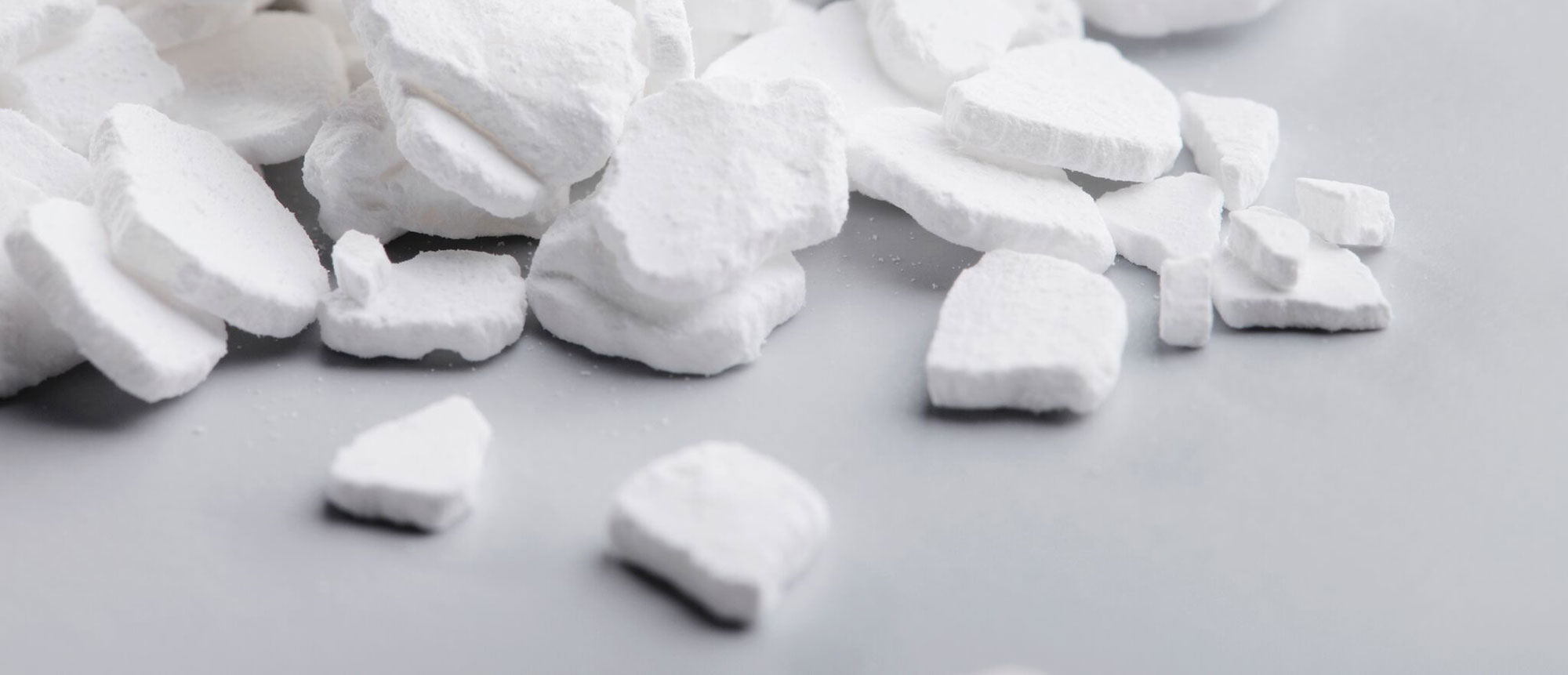


Calcium chloride is an inorganic compound with the chemical formula CaCl₂. It is a salt composed of calcium and chlorine, appearing as a white crystalline solid at room temperature. It is highly soluble in water and has strong hygroscopic properties, meaning it readily absorbs moisture from the air.
Properties of Calcium Chloride
- High solubility in water and alcohol
- Strong hygroscopicity
- Exothermic when dissolved in water
- High melting and boiling point
- Non-flammable and stable under normal conditions
Main Applications
1. De-icing & Anti-icing
Calcium chloride is widely used for melting snow and ice on roads, highways, bridges, and parking lots. It works effectively at low temperatures, making it essential for winter road maintenance.
2. Desiccant & Drying Agent
Due to its strong moisture absorption ability, it is used as a desiccant for gases, liquids, and air drying in industrial production.
3. Dust Control
It is sprayed on roads and construction sites to suppress dust by binding fine particles together.
4. Industrial Uses
- Used in oil and gas drilling to increase fluid density
- Applied in concrete acceleration to speed up curing
- Used in wastewater treatment, metallurgy, and chemical manufacturing
5. Food & Beverage Industry
As a food additive, calcium chloride is used for:
- Firming agent in canned vegetables
- Electrolyte in sports drinks
- Stabilizer and thickener in food processing
Production Methods
Calcium chloride is mainly produced from:
- Limestone and hydrochloric acid
- By-products from the soda ash industry
- Natural brine processing
Safety & Handling
Calcium chloride is generally safe when used properly. It may cause mild irritation to skin and eyes, so direct contact should be avoided. It should be stored in a dry, sealed container to prevent moisture absorption.
Why Calcium Chloride Price Fluctuates
The price of calcium chloride is affected by:
- Raw material costs (limestone, hydrochloric acid)
- Energy prices for production
- Supply and demand in winter de-icing season
- Logistics and transportation costs
- Environmental and industry policies
Calcium Chloride is also exothermic, a fancy word that means it creates heat when it comes in contact with water, helping it melt ice faster than any other ice melting chemical.
How fast, you ask?
In the first 20 minutes after application at 20°F (-7°C), Calcium Chloride melts approximately:
30% more ice than magnesium chloride
35% more ice than rock salt
130% more ice than urea
400% more ice than potassium chloride
Calcium Chloride is also gentler on vegetation and a little less corrosive than rock salt (the “salt” we generally think of when the roads and highways get salted).